
What Fascia Actually Is — and Why It Explains So Much Chronic Pain
The connective web you've never heard of may be behind the pain you can't shake.
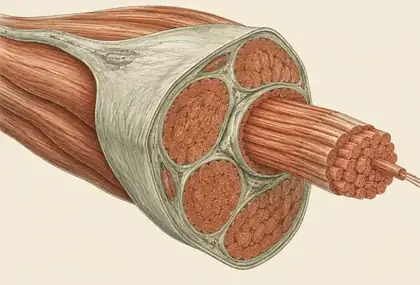
Fascia is a thin, continuous layer of connective tissue that wraps every muscle, organ and bone. Think of it as a full-body wetsuit that holds everything in place.
When fascia is healthy it glides. After injury, surgery, stress or years of the same posture, it can tighten and stick. Because it's all connected, a restriction in one place can pull on another — which is why your neck can hurt because of your hip.
That's the reason I spend so much time looking at the whole body before I work on the spot that hurts. Releasing the real restriction is what lets relief last.
Looking beyond a single spot
The existing article offers a starting point, not a complete answer. looking beyond a single spot is a useful place to begin. I take time to hear what matters to you, what you hope to get from a visit, and what would make the experience feel comfortable. I do not assume that every person wants the same pressure, pace, or focus. We can talk through what feels appropriate, and you can ask me to adjust at any point. My work is massage therapy, not medical diagnosis or medical treatment. If a concern belongs with a doctor, I will say so plainly. A good session starts with clear communication rather than a set routine. Tell me what has changed, what you have already tried, and whether there are areas you would like me to avoid. You do not need special language to explain it. Everyday descriptions are enough. I will explain my approach in straightforward terms and check in as we go. There is no need to push through discomfort to prove anything. In practical terms, looking beyond a single spot also means keeping expectations realistic and making choices together. A single visit is not a promise of a particular result. Bodies and circumstances differ, and I cannot guarantee an outcome. I can offer careful hands-on work, attention, and an honest conversation about whether continuing makes sense. You remain in charge of your comfort throughout.
How I assess a pattern
The existing article offers a starting point, not a complete answer. how i assess a pattern is a useful place to begin. I take time to hear what matters to you, what you hope to get from a visit, and what would make the experience feel comfortable. I do not assume that every person wants the same pressure, pace, or focus. We can talk through what feels appropriate, and you can ask me to adjust at any point. My work is massage therapy, not medical diagnosis or medical treatment. If a concern belongs with a doctor, I will say so plainly. A good session starts with clear communication rather than a set routine. Tell me what has changed, what you have already tried, and whether there are areas you would like me to avoid. You do not need special language to explain it. Everyday descriptions are enough. I will explain my approach in straightforward terms and check in as we go. There is no need to push through discomfort to prove anything. In practical terms, how i assess a pattern also means keeping expectations realistic and making choices together. A single visit is not a promise of a particular result. Bodies and circumstances differ, and I cannot guarantee an outcome. I can offer careful hands-on work, attention, and an honest conversation about whether continuing makes sense. You remain in charge of your comfort throughout.
Working at a patient pace
The existing article offers a starting point, not a complete answer. working at a patient pace is a useful place to begin. I take time to hear what matters to you, what you hope to get from a visit, and what would make the experience feel comfortable. I do not assume that every person wants the same pressure, pace, or focus. We can talk through what feels appropriate, and you can ask me to adjust at any point. My work is massage therapy, not medical diagnosis or medical treatment. If a concern belongs with a doctor, I will say so plainly. A good session starts with clear communication rather than a set routine. Tell me what has changed, what you have already tried, and whether there are areas you would like me to avoid. You do not need special language to explain it. Everyday descriptions are enough. I will explain my approach in straightforward terms and check in as we go. There is no need to push through discomfort to prove anything. In practical terms, working at a patient pace also means keeping expectations realistic and making choices together. A single visit is not a promise of a particular result. Bodies and circumstances differ, and I cannot guarantee an outcome. I can offer careful hands-on work, attention, and an honest conversation about whether continuing makes sense. You remain in charge of your comfort throughout.
What to notice between visits
The existing article offers a starting point, not a complete answer. what to notice between visits is a useful place to begin. I take time to hear what matters to you, what you hope to get from a visit, and what would make the experience feel comfortable. I do not assume that every person wants the same pressure, pace, or focus. We can talk through what feels appropriate, and you can ask me to adjust at any point. My work is massage therapy, not medical diagnosis or medical treatment. If a concern belongs with a doctor, I will say so plainly. A good session starts with clear communication rather than a set routine. Tell me what has changed, what you have already tried, and whether there are areas you would like me to avoid. You do not need special language to explain it. Everyday descriptions are enough. I will explain my approach in straightforward terms and check in as we go. There is no need to push through discomfort to prove anything. In practical terms, what to notice between visits also means keeping expectations realistic and making choices together. A single visit is not a promise of a particular result. Bodies and circumstances differ, and I cannot guarantee an outcome. I can offer careful hands-on work, attention, and an honest conversation about whether continuing makes sense. You remain in charge of your comfort throughout.
Choosing a next step
The existing article offers a starting point, not a complete answer. choosing a next step is a useful place to begin. I take time to hear what matters to you, what you hope to get from a visit, and what would make the experience feel comfortable. I do not assume that every person wants the same pressure, pace, or focus. We can talk through what feels appropriate, and you can ask me to adjust at any point. My work is massage therapy, not medical diagnosis or medical treatment. If a concern belongs with a doctor, I will say so plainly. A good session starts with clear communication rather than a set routine. Tell me what has changed, what you have already tried, and whether there are areas you would like me to avoid. You do not need special language to explain it. Everyday descriptions are enough. I will explain my approach in straightforward terms and check in as we go. There is no need to push through discomfort to prove anything. In practical terms, choosing a next step also means keeping expectations realistic and making choices together. A single visit is not a promise of a particular result. Bodies and circumstances differ, and I cannot guarantee an outcome. I can offer careful hands-on work, attention, and an honest conversation about whether continuing makes sense. You remain in charge of your comfort throughout.
— Bill Britt, LMT
Related services
New here? What to expect on your first visit.